
FAT/SAT Testing
Best practice of SAT Testing in water pumping stations.
| Customer | Water Authority |
| Location | Noord Brabant/The Netherlands |
| Industry | Waste Water |
| Process | Booster Station |
| Equipment | Waste water pumps (3 pcs) |
| Products | 32 channel monitoring system including cables/sensors etc |
| Services | Providing equipment (rental), (de)installation of equipment and analysis & reporting |
The Challenge
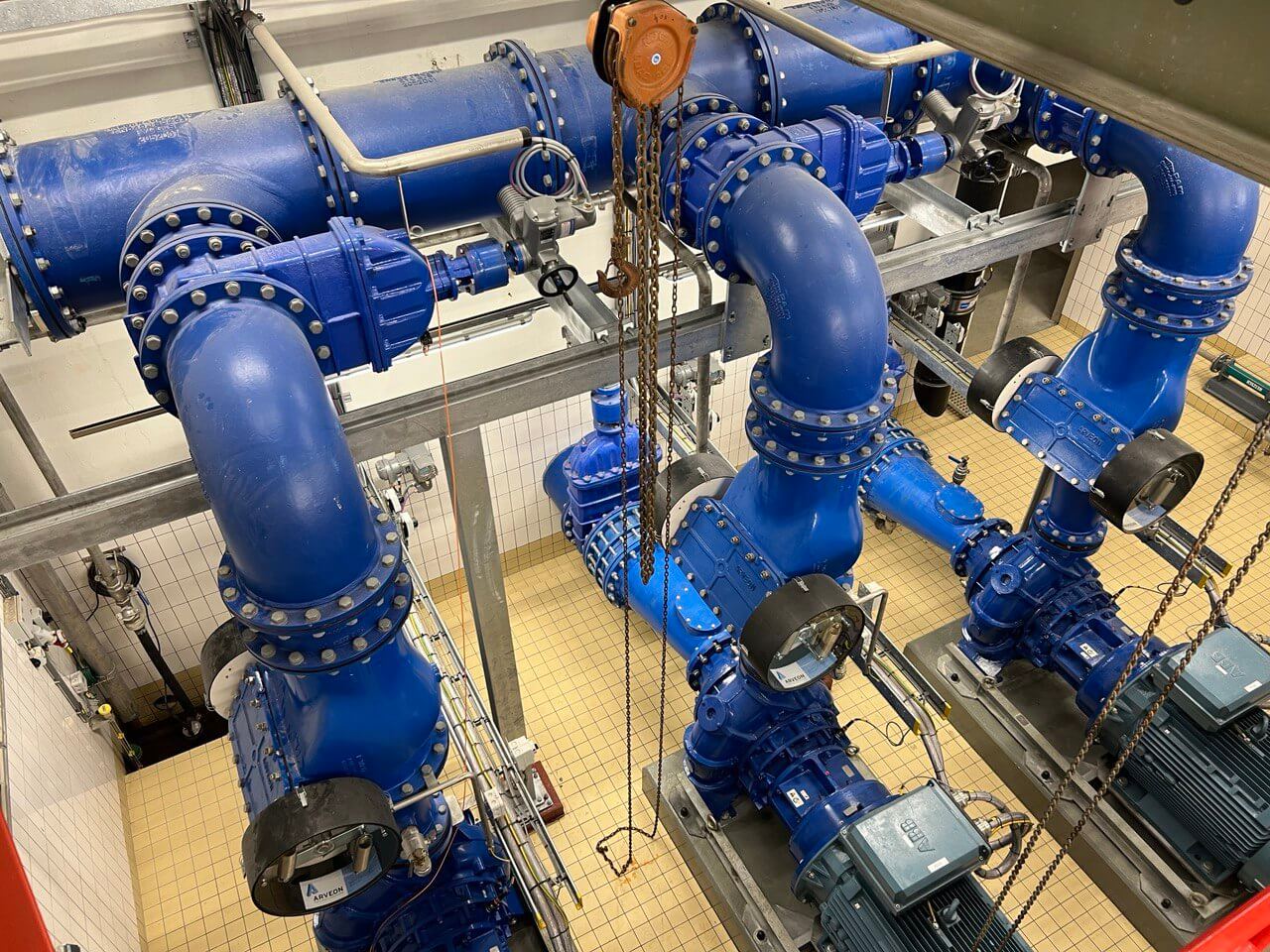
This pumping station is a highly critical installation that functions as a booster station during heavy rainfall. Despite the fact that the installation will be used to a limited extent, it must be able to function extremely reliably. Almost immediately after commissioning this new pumping station, increased vibration levels and seal leaks became apparent.
Due to the characteristic properties of the installation, standard vibration measurements carried out with a handheld device are not possible to collect the correct data.
 |
 |
 |
Our Findings
A preliminary study has shown that the installation is only operational for a longer period of time during prolonged heavy rainfall and that all relevant work areas can be reached in these conditions. This situation cannot be simulated and planning such a measurement session is extremely difficult. It was decided to ultimately install a stand-alone 32-channel measuring system with its own network connection for remote data analysis.
The subsequent measurements results are assessed and quantified in accordance with the relevant (ISO) standards as described in the contracts between contractor and client.
Our Approach
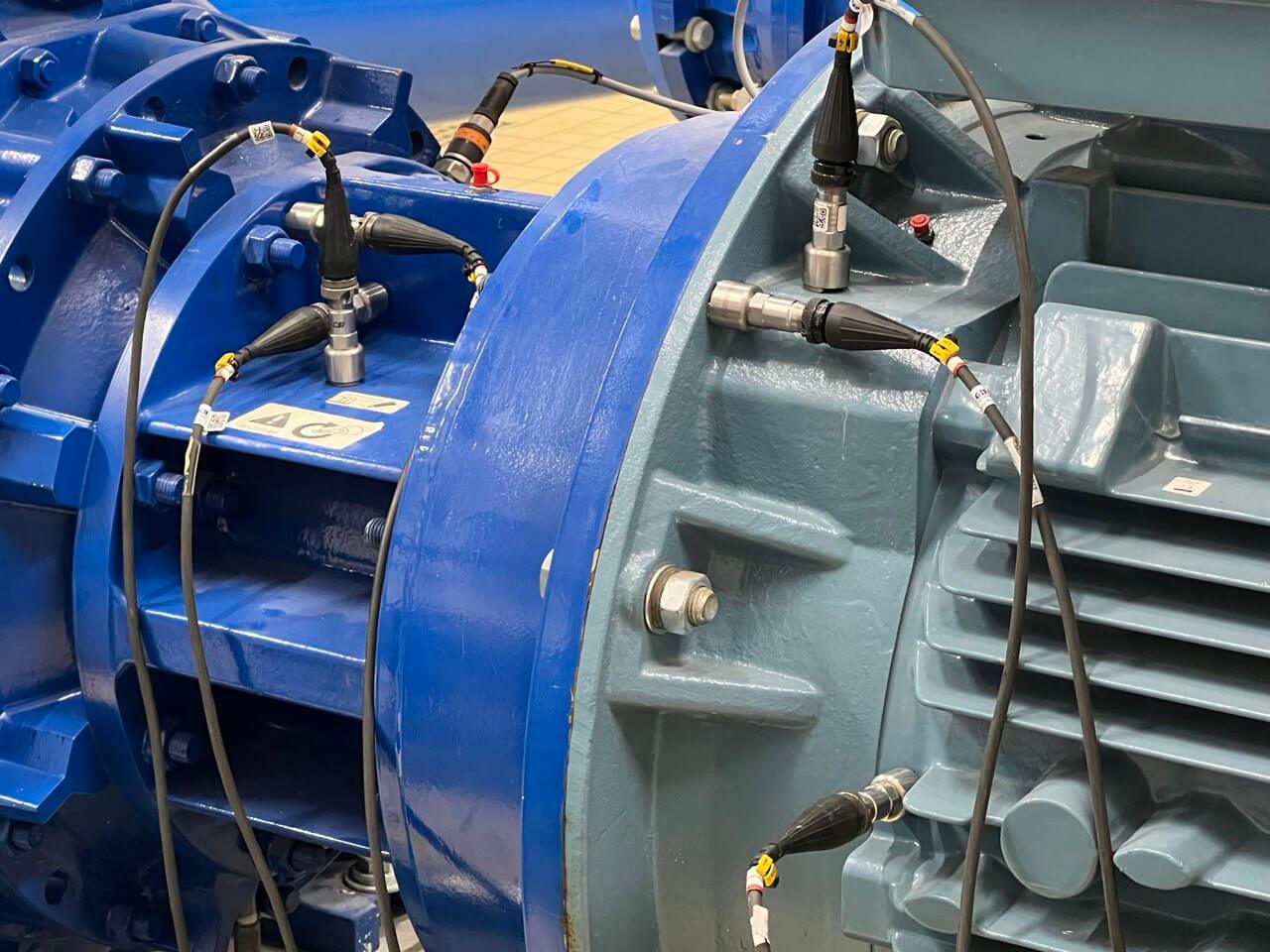
A 32-channel stand-alone monitoring system has been installed and each of the 3 pumps are equipped with 9 accelerometers and each pump has its own tachometer/speed probe. The remaining 5 accelerometers are placed on the pipework.
The system is programmed in such a way that when one of the pumps is in “running mode” transient archives are stored. In addition, spectra and time signals are written at predefined speeds.
Through our own remote connection we are able to monitor the process remotely, adjust settings where necessary, etc.
Our Solution
The characteristic properties of the pumping station, the fairly wide operating range of the pumps (500 to 1495 rpm), the fact that not all pumps run simultaneously and the relatively short running times of the pump (in many cases only a few minutes), makes a standard approach difficult. By using transient events, we are ultimately able to gain insight into the correct information and share it clearly with the client.


