
Field Balancing
Dirt, wear, crashes, construction changes and even overhauls can all have a negative effect on balance of a machine.
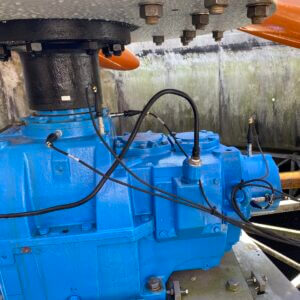
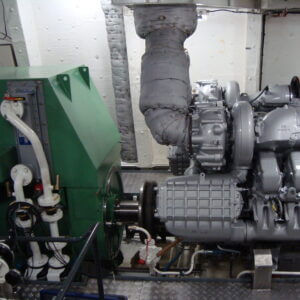
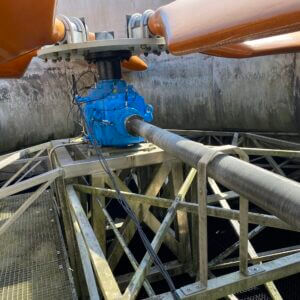
Balancing the rotor on-site in the machine itself is, in many cases, the better option reducing downtime, costs and the risk that comes with removing, transporting and remounting the rotor.
The aim of balancing is to reduce vibration levels at the rotational frequency of a rotating machine. This is achieved by improving the distribution of rotor mass, reducing eccentricity of the centre of gravity, and therefore lowering the resulting centrifugal forces.
Field balancing reduces vibration at rotational speed by correcting rotor mass distribution and minimising centrifugal forces.
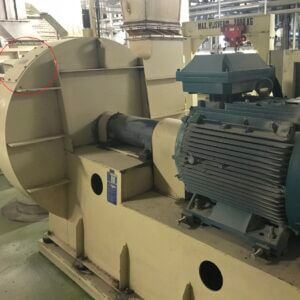
Our SolutionImbalance is corrected by adding or removing compensating masses at prescribed locations on the rotor to counteract the initial unbalance. Trial masses are applied on balancing planes defined by our engineers, such as wheel flanges, fan blades, predicted balancing holes, or slopes. Using specialised calculation software, the effect of these trial masses is analysed to determine the required correction mass and its exact location. High vibration levels are often caused by imbalance, generated by eccentricity of the rotor’s centre of gravity relative to its axis of rotation. If the rotating component is physically accessible, balancing on location is possible in most cases. |
Rigid rotorsMachinery operating below its first critical speed. Typical examples include fans, pumps, and other low- to medium-speed machinery. These rotors experience minimal deflection, making balancing relatively straightforward. Flexible rotorsMachinery operating above its first critical speed, such as steam or gas turbine generator sets, CNC machinery, and other high-speed equipment. Elastic rotor deflections make balancing more complex and require specialised expertise. |
Our Solution
Field balancing corrects imbalance by adding or removing compensating masses at defined rotor locations to counteract centrifugal forces.
Trial masses are applied on selected balancing planes and analysed using calculation software to determine the correct mass and position.
Low- to medium-speed machinery operating below the first critical speed, where rotor deflection is minimal.
High-speed machinery operating above the first critical speed, requiring advanced balancing techniques due to elastic deflection.
Offering
Measurement and engineering services delivered by experienced, involved, and inspired engineers, supported by 24/7 service availability.


Offering
Engineering-led field balancing services delivered by experienced specialists, with 24/7 availability.
DeliveringTo guarantee accurate and repeatable balancing results, we use only high-quality measurement and balancing equipment. Balancing, vibration, and phase measurements are performed using 2- or 4-channel handheld instruments, or for more complex applications, multi-channel systems with 8, 24, or 32 channels. When phase measurements are not possible or unavailable, a validated four-run method is applied. This technical capability, combined with our engineering expertise and strong customer service focus, ensures consistent and reliable outcomes. |
Client outcomes
|
Delivering
We use high-quality balancing and vibration measurement equipment to deliver accurate and repeatable results, even for complex field balancing applications.
Multi-channel measurement systems and alternative methods such as four-run balancing are applied when phase measurements are unavailable.
Key benefits
- Increased availability and service life
- Lower vibration and noise
- Reduced risk of secondary damage
- Lower lubricant and energy consumption
- Fewer breakdowns and reduced downtime

Local service backed by global support
- 24 hours a day, 7 days a week, 365 days a year
- Clear detailed reporting with actionable insights
- Expert support and consultation
Local service backed by global support
- 24 hours a day, 7 days a week, 365 days a year
- Clear detailed reporting with actionable insights
- Expert support and consultation


